Vitamin Supplements for Macular Degeneration
We are commonly asked what vitamin supplements are available for macular degeneration and whether they help.
Over the last 20 years two large studies were conducted to examine the effect of supplements on people with macular degeneration. They were the AREDS (Age Related Eye Disease Study) and then AREDS2.
Unfortunately no vitamin supplement can cure or reverse the damage that macular degeneration causes but in the AREDS and AREDS2 studies a specific combination of antioxidants, vitamins, Zinc and Lutein and Zeaxanthin have been shown to reduce progression of the condition by as much as 25%. This reduction in progression was only reported in the study for patients that already had at least moderate macular degeneration. There may be some benefit in early macular degeneration but that was less certain from the study. The supplements seem to help to reduce the conversion from dry to wet type macular degeneration.
What ingredients were shown to be beneficial in the AREDS2 formulation?
- Vitamin C (Ascorbic Acid) – 500 mg
- Vitamin E (d-alpha-Tocopherol) – 400 IU
- Zinc (Zinc Oxide) – 80 mg and Copper (cupric oxide) – 2 mg
- Lutein – 10mg
- Zeaxanthin – 2mg
You would struggle to achieve these doses in a normal diet. These amounts are between 5-15x the daily recommended intake.
Is there anything else I can do to reduce my risk of macular degeneration or it progressing further?
- If you are a smoker stop and encourage anyone else in your household to do so also. Smokers have up to a 4x risk of losing vision from macular degeneration.
- You should wear sunglasses to protect your eyes from UV light.
- A diet rich in green leafy, red and yellow vegetables are a good source of antioxidants. Nuts and seeds are a good source of Vitamin E. Fish and Eggs have a high Zinc content. Lutein and Zeaxanthin are found in eggs.
- Other supplements such as Saffron, Bilberry and Ginkgo biloba do not have strong evidence at this stage.
What supplements should I buy?
We don’t recommend a particular brand of supplement as long as it contains the AREDS2 formulation. Some examples include:
MDEyes is available at http://www.mdeyes.com.au/ and comes in a once per day gel capsule.
Macutec Essentials (once daily) at https://www.macutec.com.au/view/macutec-once-daily/34
You should check with your General Practitioner (GP) if you intend taking a new supplement.
More reading:
https://nei.nih.gov/amd
https://www.nei.nih.gov/areds2
https://www.nei.nih.gov/areds2/PatientFAQ
https://www.nei.nih.gov/areds2/MediaQandA
Thera Tears Lubricant Eye Drops and Lubricant Eye Gel
Unfortunately there is a worldwide shortage of Theratears until early 2018 but this date could change again.
We recommend Thera Tears lubricant eye drops and gel to many patients because in our opinion and experience they provided the best relief of many dry eye conditions as well as being an excellent fluid for insertion of contact lenses.
- There is no eye drop or gel on the market that is an exact replacement for the Thera Tears products.
- Rather than recommending just one drop to replace it we have had to recommend some options because some patients report that one type is better than another for their particular condition.
- All recommendations are for the single use preservative free containers not the bottles of drops that do contain preservatives.
- If you experience any stinging from the drops you are trialing please stop using them and try one of the other recommended drops or please contact our office.
Replacement for Thera Tears Lubricant Eye Drops
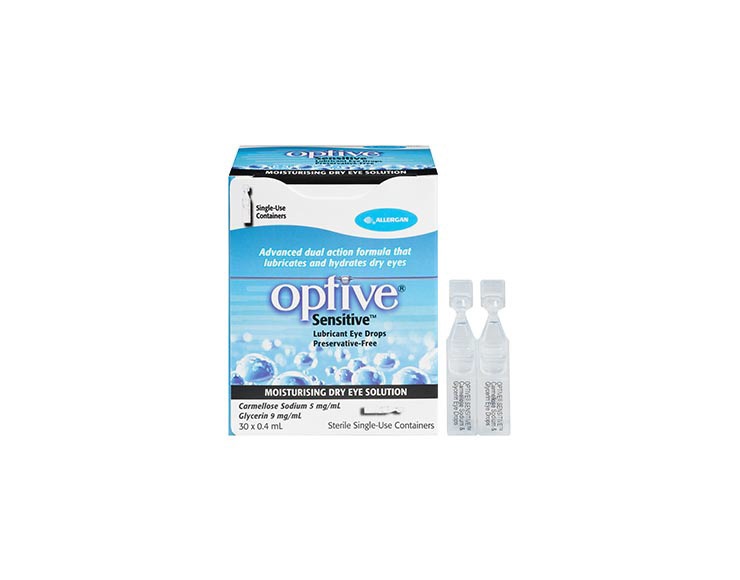
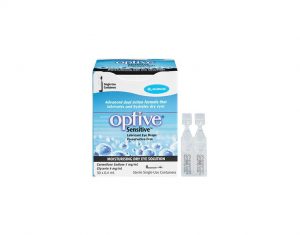
Optive Sensitive – Single use containers – 30 x 0.4ml
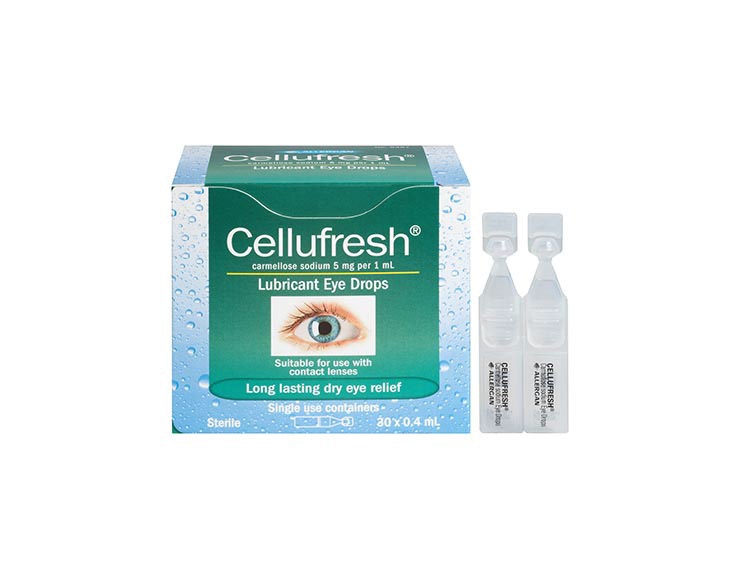
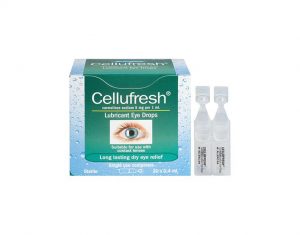
Cellufresh – Single use containers – 30 x 0.4ml
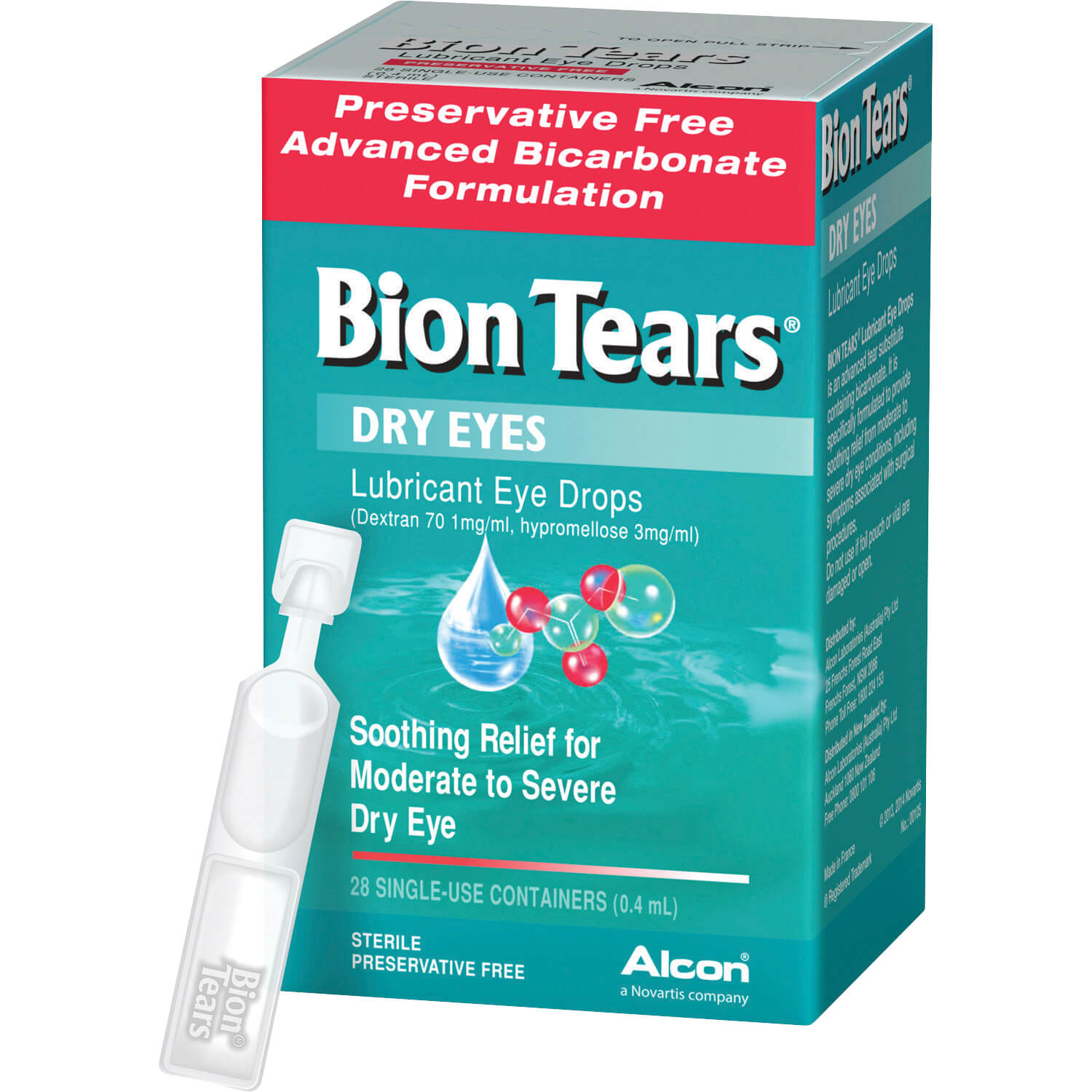
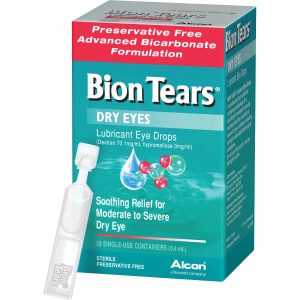
Bion Tears – Single use containers – 28 x 0.4ml
Replacement for Thera Tears Lubricant Eye Gel
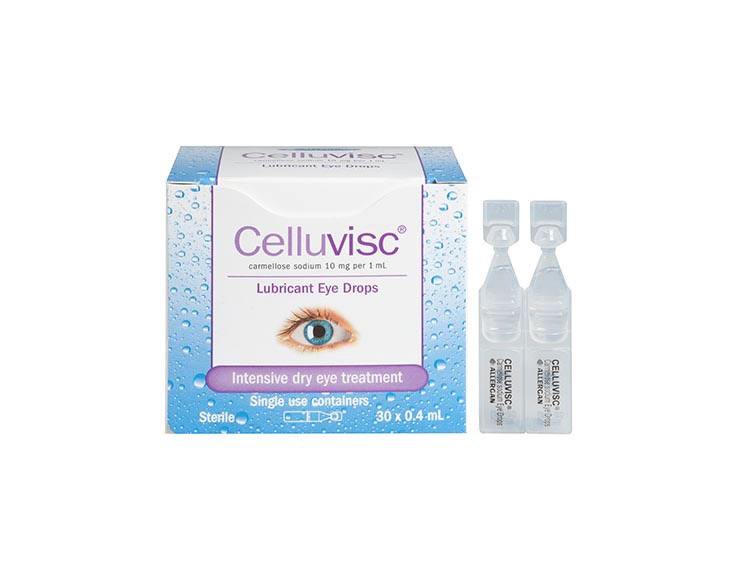
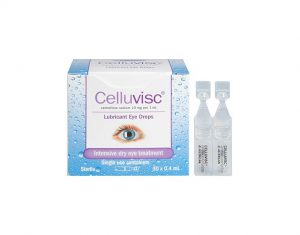
Celluvisc – Single use containers – 30 x 0.4ml
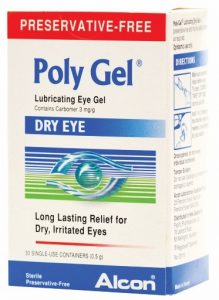
Polygel – Single use containers – 30 x 0.5g
Introducing the Bruder Eye Hydrating Mask – Proven to relieve the symptoms of dry eyes. Now available at Eye5 Optometrists.
Who here suffers from dry, itchy eyes? Don’t worry, we understand your pain and are here to help! We have just received a brand new product that is proven to relieve the symptoms of dry eyes (and no, it isn’t eye drops). Cue the incredible Eye Hydrating Mask by Bruder.
What is it?
The Bruder Eye Hydrating Mask is a natural, proven way to bring relief to dry eye syndrome, styes, chalazions and blepharitis. It replenishes moisture and relieves dryness, simply and naturally. The Mask may be applied as often as needed.
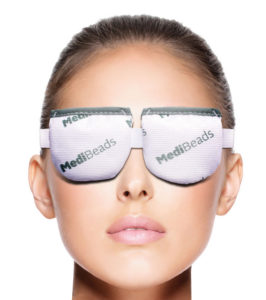
Bruder Eye Hydrating Mask
How it works.
The secret is the patented technology. Bruder Eye Hydrating Mask features MediBeads® which continuously absorb and store water molecules from the air. When microwaved, the clean, natural moist heat goes to work immediately to provide soothing relief. A heated Eye Hydrating Mask helps stabilize the tear film, improves oil gland function and slows tear evaporation. Properly hydrated and lubricated eyes can expel bacteria and debris more efficiently so your patients’ eyes will feel refreshed and rejuvenated.
It is Patient friendly.
The Bruder Eye Hydrating Mask is an easy to use and natural way to treat chronic dry eye, MGD and Blepharitis. After 20 seconds in the microwave, you can simply apply the Mask over your closed eyes for several minutes. The moist heat goes to work immediately to help slow tear evaporation. There is no need to add water, no waiting and no mess.
Product benefits:
- Naturally anti-bacterial
- Non-toxic and latex-free
- Self-hydrating – no need to add water
- No covers or pads needed
- Unique eye pod design
- Soft adjustable strap
- Washable and reusable
Bruder Eye Hydrating Mask
Want to find out more? Visit the Bruder website for details, or give us a call on 9345 2234.
It can often be difficult for children to fully understand the importance of taking care of their eyes. To combat this issue, we recommend explaining this in fun-filled ways that can really get them to be responsible for the protection of their eyes.
One way of explaining the importance of their eyes to them is by using simple poems and stories. For example, you can read books with your child about wearing glasses. This can help them to feel more comfortable about wearing glasses, and get them to understand why it is important. Some examples of children’s books include:
I See, You See, We ALL See! by Allison Joyce and Don McClain
Jack Wears a Contact Lens and Glasses … Just Like You! by Juliette Vignola
The Princess Who Wore Glasses by Laura Hertzfeld Katz
Fancy Nancy: Spectacular Spectacles by Jane O’Connor
If glasses or contact lenses have been recommended for your children, encourage them by complimenting them on how they look in their glasses. Also let them know they should never wear other peoples’ glasses or contact lenses.
Furthermore, provide your children with a healthy diet of natural, colorful foods. Ensure they eat their vegetables and fruits which are good for their eyes such as carrots, broccoli, grapefruits etc.
When at school, advise them not to shoot rubber bands, or play with sticks or sharp objects. When at home, provide your children with age appropriate toys that can help them in their motor and eye-hand coordination. Toys like building blocks, puzzles, stringing beads and art tools like pencils, paint, crayons, finger paints etc.
When playing sport, explain why they often need to wear protective eyewear like eye guards, goggles, helmets and sports glasses.
We hope these tips assist in helping your children take care of their eyes. As always, if your child hasn’t had an eye test in a while, please feel free to contact our practice to arrange an eye test with the lovely Dr. Jean Pierre.
What is Conjunctivitis?
Conjunctivitis is redness and swelling of the conjunctiva – the transparent film that covers the whites of the eyes. Anyone can have it, but it is more common among children. This is because they don’t take steps to prevent or know how to take care of it. Conjunctivitis can affect one or both eyes. It is usually nothing more than a minor eye irritation, however it always pays to understand the causes, symptoms and ways in which you can treat it, so it does not turn into a more serious condition.
Types and Causes
- Allergic Conjunctivitis – Caused by pollen, dust or allergy caused by contact lenses.
- Infectious conjunctivitis – Caused by bacteria or virus passed from one person to the other.
- Irritant Conjunctivitis – Caused by chemicals from hair care products or cosmetics, chlorinated water, or from a loose eyelash touching the surface of the eye.
Symptoms
- Feeling as if there is sand in the eye
- Tears running from the eyes
- Itching in the eye
- Yellowish or Greenish discharge from one or both eyes
- Sensitivity to any form of light
- Reddening of the eyes
- Blurred vision
How Can You Prevent Conjunctivitis?
Bacterial and viral conjunctivitis are contagious. You can prevent getting it or passing it to someone by taking a few preventive steps like:
- Not using the sufferer’s cosmetics, eye makeup or eye drop.
- Not sharing clothes, handkerchiefs, beddings, or towels with an infected person.
- Washing your hands with soap and water always especially if you are the one infected.
- Keeping your hands away from the infected eye.
- Washing your handkerchiefs or other forms of cloth used when infected.
- Staying away from work or school to prevent a further spread.
Treatment
Conjunctivitis doesn’t really need treatment as it often goes away after 4 to 7 days. However, if it stays around for too long, we recommend booking in to see your optometrist. Please see below a few ways in which you can treat conjunctivitis:
- If it it’s a bacterial infection, you may be given eye drops by your optometrists.
- If it is chemical, it is better to wash the eyes with plenty of clean water to remove the chemicals immediately.
- While waiting for the few days to pass before it heals completely, you can lessen the pain by using a cold compress on the eyes. Make sure to change the towel as often as possible so the infection doesn’t spread.
Studies show that approximately 80 percent of what a child learns in school is information that is presented visually. If your child is showing signs of not doing well in school, one basic area is to check their vision.
According to the College of Optometrists in Vision Development, below is a table of symptoms and their associated vision problems.
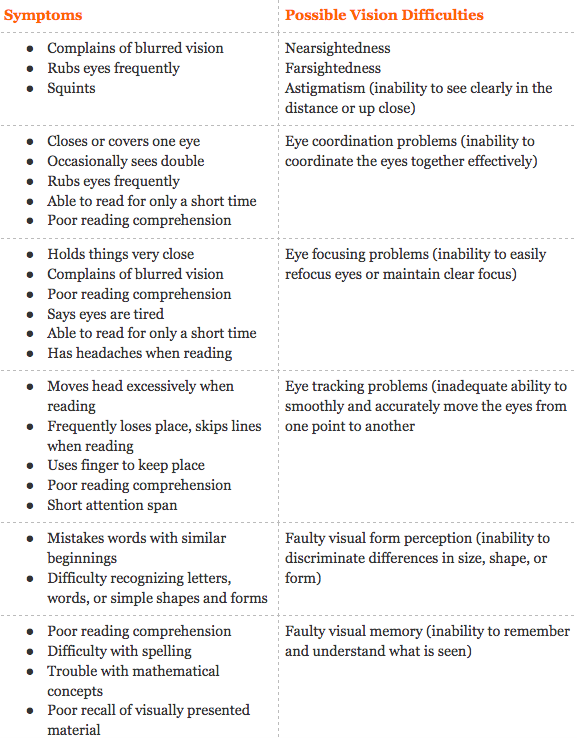
Treatment of Learning-Related Vision Difficulties
If you suspect your child has any of these symptoms, we recommend booking an appointment with Dr. Jean-Pierre Guillon. Jean-Pierre has a special interest in children’s vision and will assist in correcting any learning related vision difficulties your child may be experiencing. Furthermore, we recommend you contact your child’s teacher at school, so they can assist where possible.
Sometimes children with learning-related vision difficulties can go through emotional problems like anxiety or low self esteem. Reassure your child that these difficulties have nothing to do with a person’s intelligence. Many children with such difficulties simply have a different technique in handling information than their peers.
If you’d like any more information on how you can help your child overcome any issues they have with these difficulties, please see our article here.
If you’ve been contemplating replacing your glasses with contact lenses, then this article is for you. We understand the idea of wearing contacts can be daunting for some, so we have created a list of reasons as to why we love wearing contact lenses over glasses!
- Unlike glasses, contacts are natural, they let people see your eyes. No more frames or thick lenses getting in the way.
- You can wear your contacts in any weather. Unlike glasses, they won’t collect precipitation, fog up or cause blurred vision for you.
- Pilots, sports people, drivers, surgeons and other professionals who need to see as much around them as possible, can safely use contact lenses. Glasses can obstruct side vision, posing as a challenge to these professionals.
- Glasses can be restrictive, and often get in the way of your everyday activities. Wearing contacts allows you to do the things you love without the restrictions. You can easily play sport, exercise, swim, go out with friends, drive and do so much more when you wear contact lenses.
- Contact lenses are worn right on the eye, so they give you more natural, crisp vision.
- No weight is felt on your face while using your contacts. When you wear your glasses for long periods of time, you can sometimes have uncomfortable weight on your face and behind your ears.
- There is no risk of breakages when wearing contacts, because unlike glasses, they won’t slip or fall off your face.
- When you wear contacts, you have the freedom to wear any pair of sunglasses you want. Often, the choices and ranges for prescription sunglasses are limiting, which can very frustrating for some.
If you’re considering switching from glasses to contacts, then we suggest booking an appointment with our lovely optometrist, Andrew Godfrey. When it comes to fitting custom contact lenses, Andrew is your go-to guy. He introduced hybrid contact lenses to Western Australia to help people who find hard contact lenses uncomfortable. There are very few practitioners left who specialise in this area. Call us today to book your appointment!
If you are over the age of 40 and have noticed that your vision is a little blurry – almost as though you are looking through a cloudy piece of glass or foggy window – then it’s time to book an eye exam with your optometrist immediately. This ‘fogginess’ is a often a sign of Cataracts.
What is Cataracts?
Cataracts is a ‘clouding’ of the eye’s lens, which happens when the proteins in the lens becomes defective and forms a mass, hence blocking light from passing through the eye. It often occurs naturally as one is aging and can sometimes lead to loss of sight.
Types of Cataracts
Nuclear Cataract: This occurs due to aging. It develops right in the central zone of the lens.
Cortical Cataract starts in the outer part of the lens and works through to the center, with a white, wedge-like, non-transparent look.
Subcapsular Cataract can be found at the back of the lens. People that take high doses of steroid medication are at a greater risk of getting this type of Cataract.
Causes of Cataracts
- Aging
- Surgery for another eye problem such as Glaucoma
- Diabetes
- Use of steroids
- Trauma after an eye injury
- Smoking and excessive drinking
- Exposure to some types of radiation and UV light
- Hereditary factors
Symptoms of Cataracts
The best way to find out if you have Cataracts is to go see your optometrist. However, it is good to have knowledge of the symptoms. The symptoms include:
- Cloudy or blurry vision
- Light from headlights, sunlight, lamps appearing too bright, a halo forming around these lights when you look at them
- Not seeing properly at night while driving (even when there are street lights)
- Colours are not as bright anymore when you look at them
- Seeing double or multiple images
Preventions of Cataracts
First and foremost, we recommend to quit smoking! Furthermore, reduce your exposure to sunlight by wearing protective eyewear and wide-brimmed hats, and try to incorporate Vitamin E and other carotenoids from foods and supplements into your diet, like green leafy vegetables, fruits, nuts and seeds. It is also a good idea to reduce or stop your alcohol consumption.
Children and Computer Vision Syndrome
In recent years, the use of computers and smartphones among children has increased dramatically. Research has confirmed the fears of many pediatric eye doctors that the alarming use of computers and the likes can put them at risk for early myopia and developing symptoms of Computer Vision Syndrome (CVS). Children can sit for hours in front of a screen, whether it be at school or at home, and over time, this can strain their eyes and make it difficult for your child’s vision system to focus.
Computer Vision Syndrome describes a group of eye and vision-related problems that result from prolonged computer, tablet, e-reader and cell phone use. It is also referred to as Digital Eye Strain.
CVS symptoms are eyestrain, neck and shoulder pain, blurred vision, headaches and dry eyes. These symptoms are worsened by continuous glare on a computer, poor seating posture, poor lighting, improper viewing distances and a combination of these factors.
How to Reduce Your Child’s Risk of Having Computer Vision Syndrome
To reduce your child’s risk of CVS, make sure he or she sits comfortably and maintains a good posture while working on the computer. The following tips should be of help:
- Upper arms should be kept relaxed and close to the body, not angled away from sides or tilted forward.
- The child should avoid slumping forward over the keyboard but should keep the back straight and shoulders back but relaxed.
- The head should be balanced in the neck and not tilted.
- The computer screen should be positioned approximately 15 degrees below eye level.
- Forearms should be kept flat on the desk, with the elbows forming at least a 90-degree angle.
- The 20-20-20 rule should be followed: Your child should rest his or her eyes every 20 minutes by looking 20 feet in front of him for 20 seconds.
You as an adult should also follow these tips to avoid the development of CVS.
Treatment of Computer Vision Syndrome
There are many options used in the treatment of CVS. Your optometrist will determine which is right for your child.
One method is the use of eye drops. This helps with the moisturizing of the eyes to avoid or stop dry eyes.
Another method is the use of special glasses designed to help prevent the problem of focusing and eyestrain associated with Computer Vision Syndrome. Your optometrist will advise if this is the right option for your child.
If you suspect your child is spending too much time behind a screen, whether it be at school or home, please book an eye appointment with our wonderful optometrist Dr. Jean-Pierre today.
What is Dry Eye Syndrome?
Dry Eye Syndrome is a common issue of the tear film that is usually characterized by the eyes not being able to make enough tears (or the tears evaporating too quickly). It affects a large number of the population and is more common in women than in men, especially those over 40 years. It is not usually serious, however may be uncomfortable.
Other names for Dry Eye Syndrome are ocular surface disease, keratoconjunctivitis, evaporative tear deficiency and aqueous tear deficiency.
Causes of Dry Eye Syndrome
A single reason can hardly be found to be the cause of Dry Eye Syndrome, but the main cause of this condition is as a result of a disruption in the tear production process. This can be triggered by one or more of the following reasons:
- Dust or heat
- Hormonal changes in women, like during menopause
- Regularly wearing contact lenses
- May be caused by certain medications such as antidepressants, antihistamines or diuretics
- Ageing
- High altitudes
- Laser eye surgery
- Some medical conditions like blepharitis, allergic conjunctivitis, contact dermatitis, rheumatoid arthritis, previous trauma to the eye caused by burns or exposure to radiation, Bell’s palsy and HIV.
Symptoms of Dry Eye Syndrome
It’s time to see your optometrist if you’ve noticed any of these signs in your eyes for a prolonged period:
- Persistent dryness
- Sensitivity to light
- Eye fatigue or blurred vision
- Red, itchy eyes
- Burning sensation
- Feeling as if there is something in your eyes
- Inability to cry like you used to when emotionally stressed
- Discomfort when wearing contact lenses
- Difficulty in reading, working on the computer or any other activity that requires your visual attention for a long period
- As odd as it may seem, watery eyes can be one of the symptoms as the eye’s surface will sometimes over stimulate production of the watery component of your tears as a protective mechanism.
Treatment of Dry Eye Syndrome
Depending on the cause, Dry Eye Syndrome may not be completely curable, but the itchiness, dryness and burning sensation can be managed.
The first thing to consider is whether there is anything that could be changed, such as your medication. That will be determined by your doctor if it is realized that that is the major cause. You could also limit or totally stop constant exposure to dust or heat. Also, wear sunglasses when outdoors to protect your eyes from sunlight, wind and dust. If it is caused by an underlying illness, your doctor may prescribe the correct medication for it or may direct you to a specialist.
To combat the dryness, redness and itchiness, your optometrist may offer a range of drops, gels and ointments. Artificial tears, which are eye drops that always keep your eyes moisturized and help calm the dryness and itchy feeling, is often prescribed. Your optometrist may prescribe other treatments which include:
- Prescription eye drops
- Changing to the type of contact lenses you wear
- An omega-3 fatty acid supplement
If you wear soft contact lenses, you may also need to use a lubricant that is preservative-free, as preservatives attached to the contact lenses can damage the eye.
If your dry eyes are severe and fail to respond to other forms of treatment, surgery may be the last resort. However this is extremely rare.